
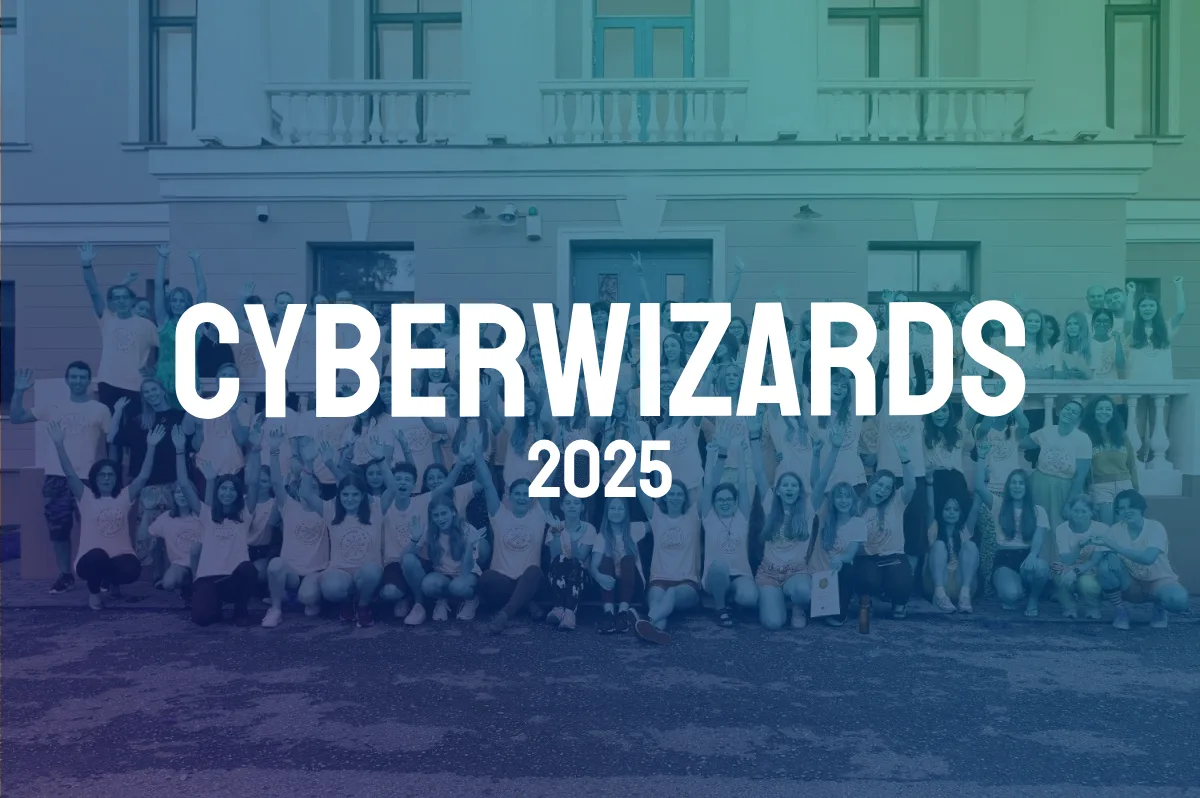
This summer, I had the exceptional opportunity to take part in the CyberWizards 2025 camp in Estonia, as chaperone to four young French girls. The experience left a deep impression on me and shows how Estonia is reshaping the way the next generation approaches cybersecurity. Here is my feedback on this remarkable initiative.
CyberWizards 2025: much more than a cybersecurity camp
The CyberWizards 2025 camp took place from 11 to 16 August in an idyllic setting: the village of Kehtna, less than an hour from Tallinn. Organised by the RIA (Riigi Infosüsteemi Amet), Estonia’s cybersecurity authority, this free event is exclusively for girls aged 13 to 16 from across Europe, and even further afield this year. Participants came from Poland, Italy, Hungary, Estonia, Ukraine, the Czech Republic, the United States, Panama and France 🇫🇷.
The goal is clear: to make cybersecurity accessible to all and break the stereotypes that persist in our field.
Unlike other cyber events, CyberWizards 2025 requires no prior knowledge of programming or IT security. This year’s 90 participants gradually discovered the fundamentals through hands-on workshops, challenges and a Capture The Flag (CTF) at the end of the week. Not to mention the social and language side: it’s the perfect opportunity to practise English.
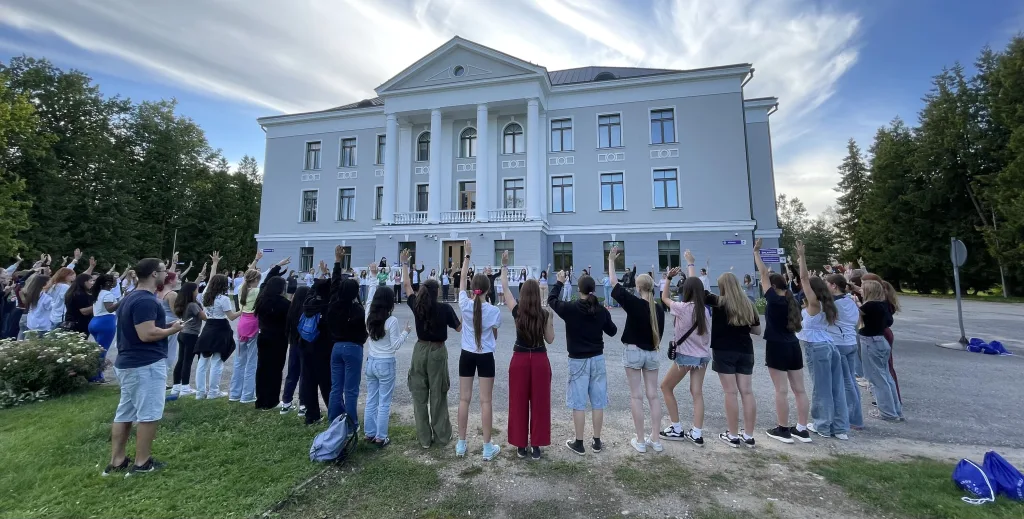
The workshops took place at the Kehtna Kutsehariduskeskus (Kehtna Vocational Education Centre).
Ynov’s commitment to bringing more women into cybersecurity
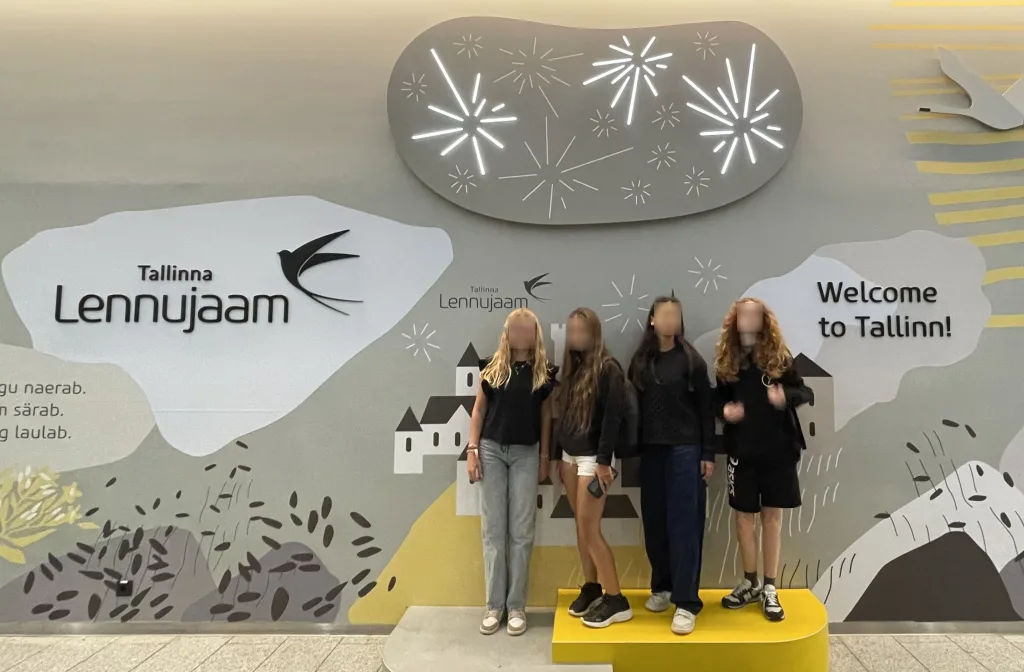
As cybersecurity lead at Ynov, I accompanied four French girls on this adventure. Our school is actively working to bring more women into cybersecurity, and into digital careers more broadly.
We face a major challenge, however: our students join at 18, an age when career choices have often already been shaped by societal biases.

That’s why we contacted RIA in 2024 to offer four French students the trip from Paris to Tallinn. Our goal isn’t to convince them that cybersecurity is wonderful, but to let them discover the field without the usual filters. We want to break the image of the lone hooded hacker in the dark, popularised by films and TV series.
We selected the participants with the help of our partner TUMO Lyon, which spread the word. It’s a free after-school centre for 12 to 18-year-olds, located at the Campus Région du numérique in Charbonnières-les-Bains. Its programme covers eight creative digital fields: programming, filmmaking, graphic design, video games, animation, robotics, music and 3D.
Inside the CyberWizards 2025 experience
A progressive, accessible programme
The week starts gently with an introduction to cybersecurity. The workshops then cover a wide range of topics, such as file analysis (JPG, WAV), the basics of Linux, vulnerabilities, password cracking, network scanning, online safety and ethics.
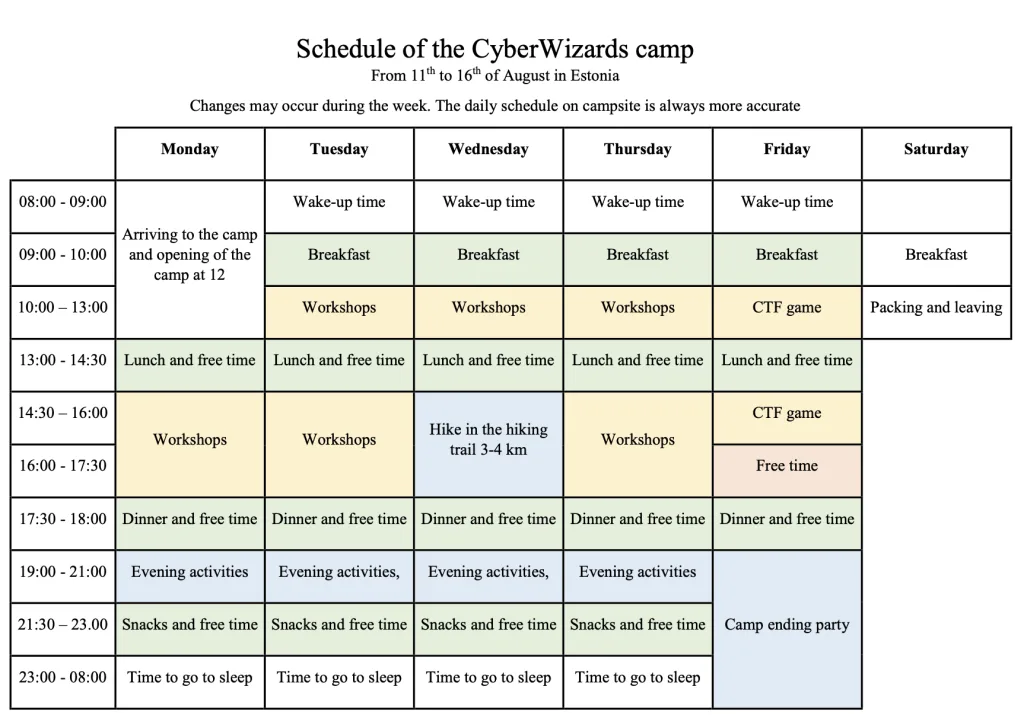
Each day combines 3 to 6 hours of technical workshops with group activities in the evening. Wednesday is a favourite, with a 3-4 km hike through the Estonian countryside that lets participants discover their host country.
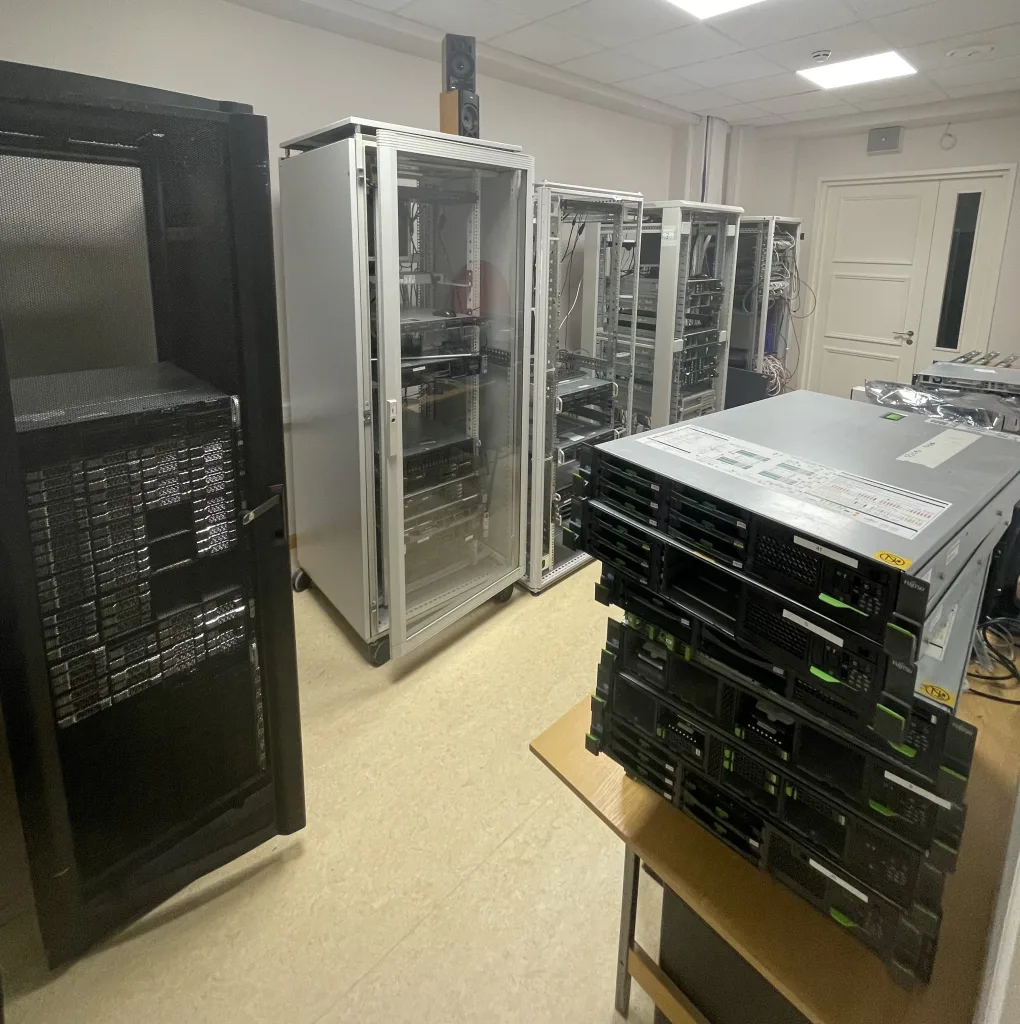
200 TB NVME SSD
1 TB of RAM x8, i.e. 8 TB
100 CPU
The impressive technical infrastructure in the photos shows how seriously the event is run. Participants have access to professional-grade equipment, so they can use real tools in real environments.
Rewarding encounters at CyberWizards 2025
I was lucky enough to meet other chaperones who are fascinating professionals, such as Angus Chen et Adam Ferencz. These conversations with international experts greatly enrich the experience. I actually discuss an app developed by Angus in my article Malicious QR codes: how quishing traps users.
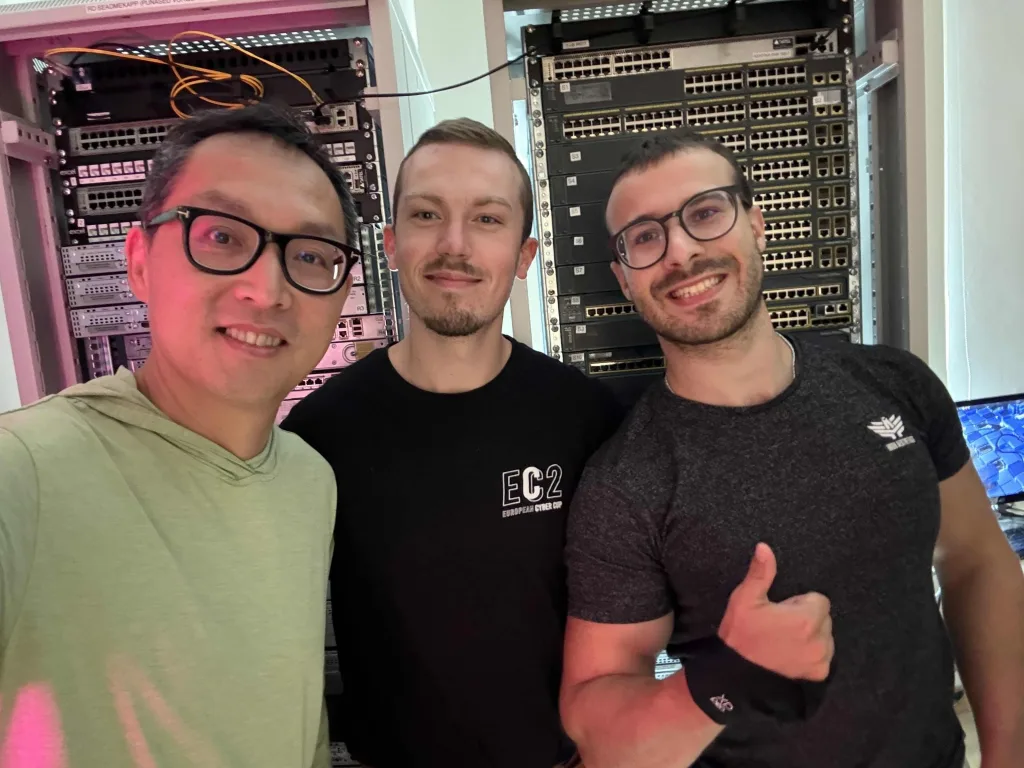
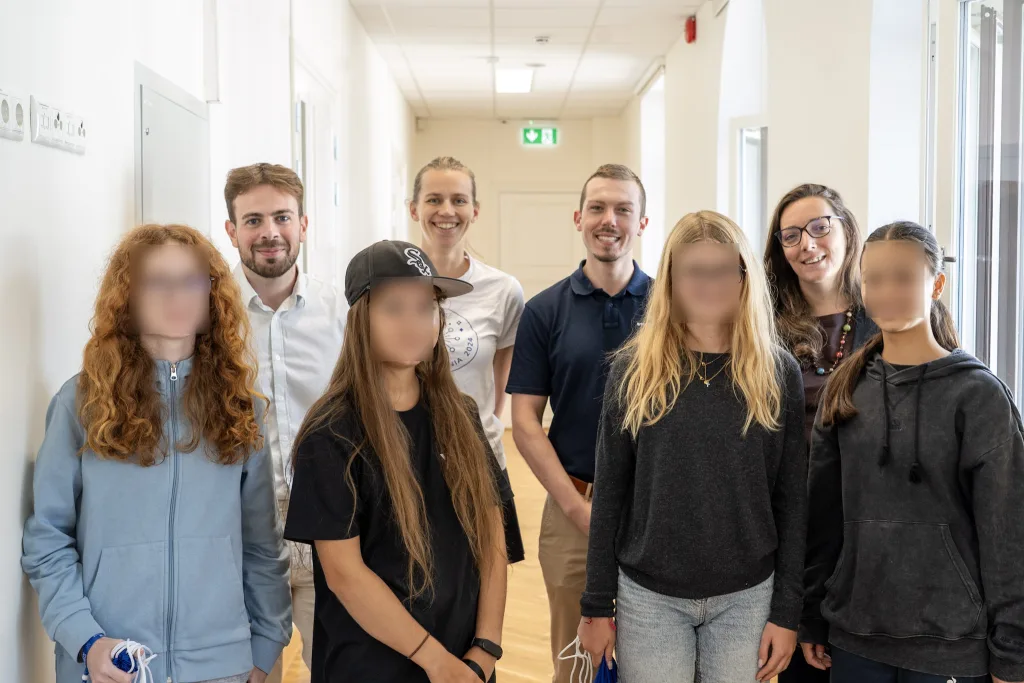
On Wednesday morning, Juliette TYRLIK-ALISPAHIC and Evan CHAMPIOT-BAYARD from the French Embassy in Estonia came to meet us and took the time to talk with our four French participants.
The transformative impact of CyberWizards 2025
Breaking cybersecurity stereotypes
One of the most powerful aspects of CyberWizards 2025 is its ability to dismantle preconceptions. Seeing other girls passionate about technology in a supportive environment, participants realise that cybersecurity is within their reach.
This realisation doesn’t stop with the participants themselves. Back at school, they become natural ambassadors, sharing their experience with friends and creating a multiplier effect that carries the message far beyond the camp.
The final CTF
The week ends with a Capture The Flag where participants put their new skills into practice. This fun, collaborative format shows that cybersecurity combines reasoning, logic, creativity and teamwork, far from the individualistic clichés so often portrayed. There are around a hundred challenges across different categories: network, web, forensics, OSINT, artificial intelligence and more.

The CTF ran on the CTFd platform, designed specifically for this kind of competition. For virtualisation, the CTF had so far relied on VMware ESX, but this was the last edition to use it. Since Broadcom’s acquisition of VMware and the end of its Academy programme for schools, the teaching staff have decided to migrate to an open-source alternative: Proxmox.

The infrastructure runs on a cluster of seven servers (the eighth is currently under maintenance), shared between teachers and students.
For hardware and cloud hosting courses, students also have dedicated servers spread across three racks. They configure the hardware themselves to suit their exercises: adding RAM, HDDs or SSDs.
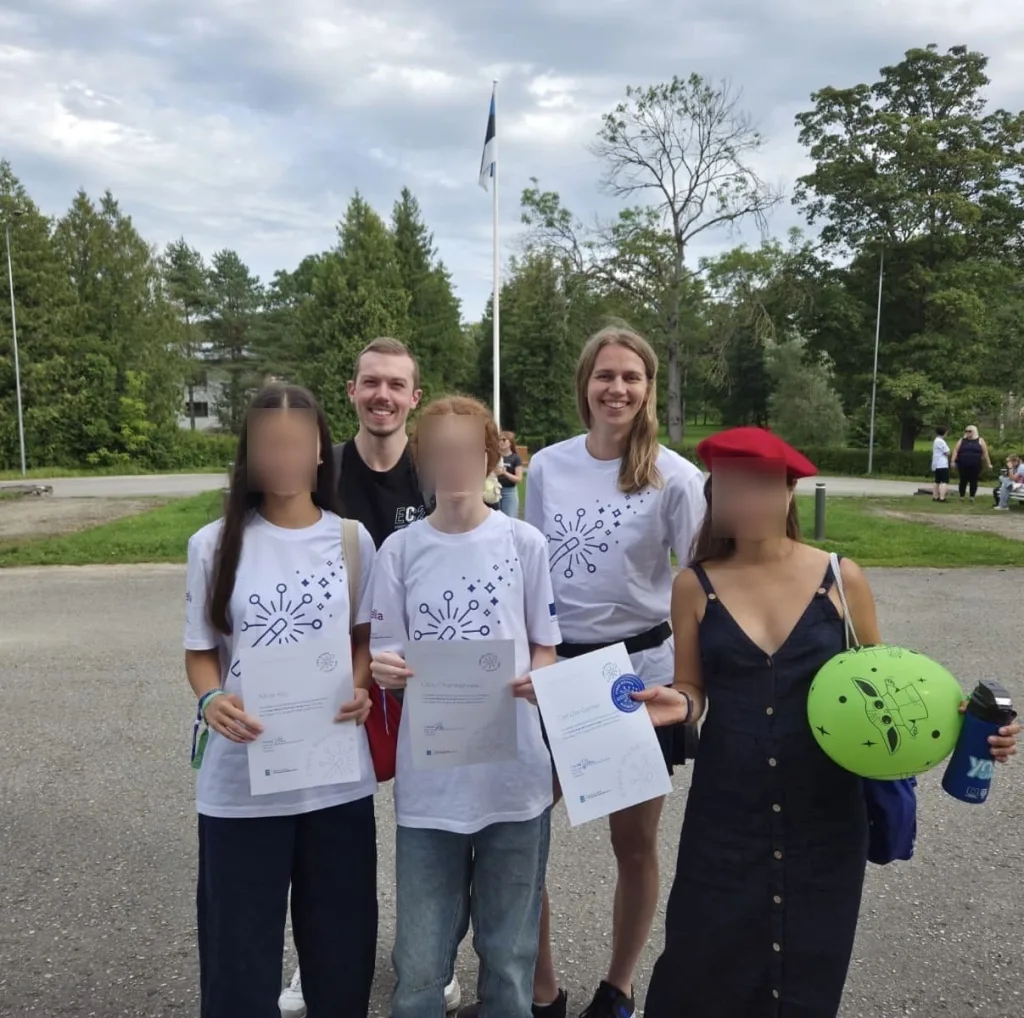
Pride was written on every face when the participation certificates were handed out. Their CyberWizards 2025 T-shirts will be a keepsake of an adventure that marked a turning point in how they see cybersecurity and their own abilities.
Estonia’s cyber ecosystem
RIA, the backbone of CyberWizards 2025
Estonia’s Information System Authority (RIA) coordinates the development and administration of information systems and organises IT security activities. It also handles security incidents on Estonian computer networks and develops national cybersecurity strategies.
The funding of CyberWizards 2025 by the European Union and the European Cybersecurity Competence Centre reflects a strong political commitment to developing tomorrow’s cybersecurity talent.

Estonia has become a benchmark for digital government and cybersecurity, partly as a result of the large-scale cyberattack it suffered in 2007. This digital expertise shows in the flawless organisation of CyberWizards 2025 and in the quality of the infrastructure provided.
How to replicate the CyberWizards 2025 experience
Start early
The CyberWizards 2025 approach shows how important it is to reach young people before 18, while their career paths are still open. Higher education institutions should build partnerships with secondary schools to reach a younger audience.
Create inclusive environments
The success of CyberWizards 2025 rests on creating a girls-only space where participants can explore without fear of judgement. This approach could inspire similar initiatives in other countries.
Focus on hands-on, collaborative learning
The hands-on workshops at CyberWizards 2025 prove that learning by doing remains the most effective approach. Alternating technical sessions with social activities creates a well-rounded experience that goes beyond technical skills.
Looking beyond CyberWizards 2025
Building on the success of CyberWizards 2025, it would make sense to develop similar programmes in other European countries. France could draw on this model to create its own awareness camps.
It will be interesting to follow the CyberWizards 2025 participants over the coming years. How many will choose to study cybersecurity? How many will go on to work in the field? This data will help refine future approaches. Some of this year’s participants had already attended the 2024 edition, and a few even the 2023 one!
The concept could also be adapted to other tech fields that lack diversity: artificial intelligence, software development, network engineering and more.
Frequently asked questions
No technical prerequisites are needed for CyberWizards 2025. You just need to be a girl aged 13 to 16 with enough English to hold a conversation.
Registration for CyberWizards 2025 is done by contacting Tiina Pau at RIA (tiina.pau@ria.ee). Groups of 3 to 6 participants must be accompanied by an adult chaperone.
CyberWizards 2025 is completely free (accommodation, meals and activities). Only travel costs to Estonia are paid by participants.
The CyberWizards 2025 programme includes progressive technical workshops, a final CTF, group activities in the evening and a hike in the Estonian countryside.
No, all the IT equipment needed for CyberWizards 2025 is provided by the organisers, with the software preinstalled.
CyberWizards 2025 is held entirely in English, encouraging language immersion and international exchanges.

Leave a Reply