
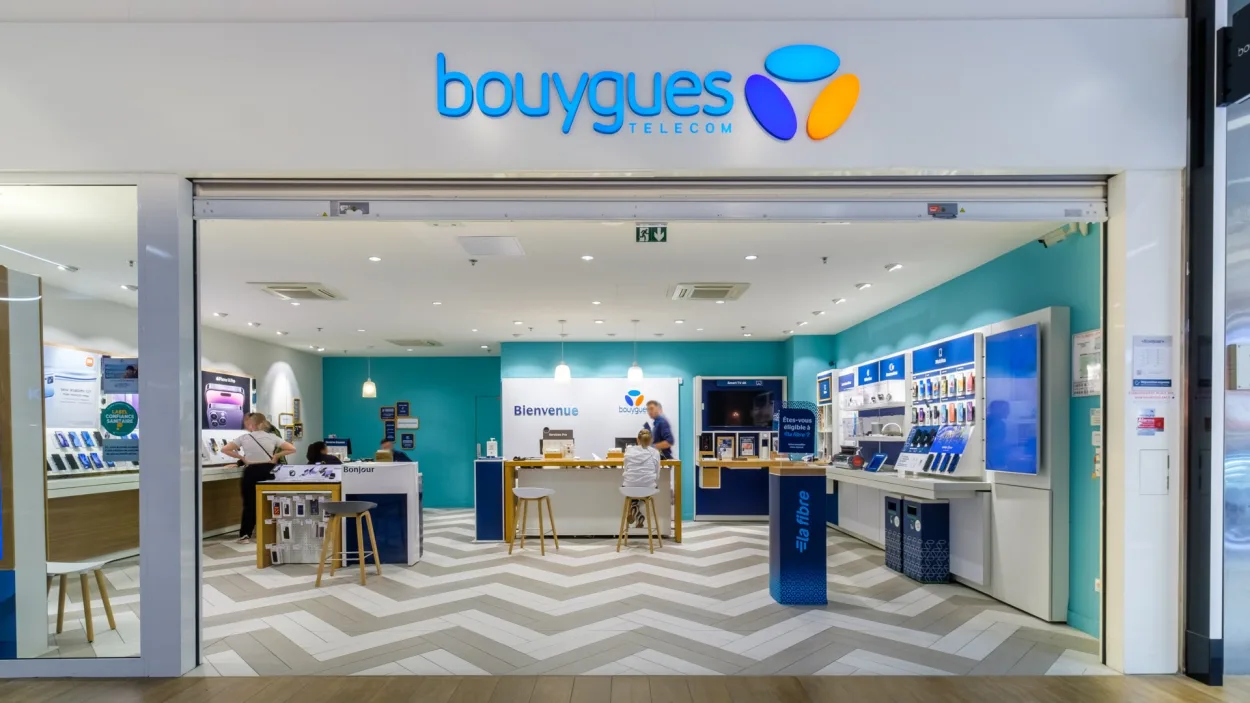
French telecom operator Bouygues Telecom has just announced that it was hit by a major cyberattack affecting 6.4 million customer accounts. This new security breach hits the French telecommunications sector, already shaken by similar incidents in recent months.
The Bouygues Telecom cyberattack in detail
The intrusion, detected on Monday 4 August 2025, gave cybercriminals access to sensitive data of millions of users. The operator confirmed that the compromised data includes personal contact details, contract information, civil status data and, more worryingly, customers’ IBANs.
It is a good opportunity to share our article on how to protect your emails, phone numbers and personal data.
Fortunately, the Bouygues cyberattack did not affect the most critical data. The company states that bank card numbers and customer account passwords remain secure.
The risks of the Bouygues cyberattack
The exposure of IBANs is a significant danger for customers. These bank identifiers can be used in fraud attempts, including fraudulent transfers or banking identity theft.
Bouygues Telecom is warning its customers about the social engineering risks following the hack. Fraudsters could use the stolen data to pose as the operator or other companies (banks, insurers) to obtain further sensitive information.
Bouygues’ response to the cyberattack
The operator says it resolved the incident as quickly as possible and immediately put the mandatory legal procedures in place. A complaint was filed with the judicial authorities and the CNIL (the French data protection authority) was notified, in line with the GDPR.
All customers affected by the Bouygues cyberattack are receiving an information email or text message. The company has also created a dedicated page to communicate about the incident and give security advice.
The telecom sector, a prime target for cyberattacks
The Bouygues cyberattack illustrates the growing vulnerability of the telecommunications sector. A few months ago, French operator Free suffered a similar incident affecting 19.2 million customers, with 5.11 million IBANs put up for sale on the dark web.
Telecom operators are prime targets for cybercriminals because of the considerable volume of personal data they manage. Their customer databases are gold mines on the black market for personal information.
ANSSI, the French national cybersecurity agency, had in fact pointed out in March 2025 that telecoms had become priority targets for espionage operations, confirming how attractive the sector is to malicious actors.
Protecting yourself after the Bouygues cyberattack
In light of the Bouygues cyberattack, customers should be extra vigilant. It is recommended to monitor bank statements closely and report any suspicious transaction immediately.
Users should also be wary of phishing attempts exploiting the breach. No request for additional information by email or phone should be accepted, even if it appears to come from Bouygues or other legitimate companies.
The incident is a reminder of the importance of maintaining rigorous security hygiene, for businesses and individuals alike, in the face of constantly evolving cyber threats.
Frequently asked questions
6.4 million Bouygues Telecom customer accounts were affected by the cyberattack.
Contact details, contract data, civil status data and IBANs were compromised, but not bank cards or passwords.
No, Bouygues confirms that customer account passwords are not affected by the cyberattack.
Monitor your bank statements and be wary of phishing attempts impersonating Bouygues or other companies.
The intrusion was detected on Monday 4 August 2025 and quickly resolved, according to Bouygues Telecom.

Leave a Reply