
The dark web continues to fascinate and intrigue in 2025, representing the hidden side of the internet that traditional search engines cannot reach. Often wrongly associated exclusively with cybercrime, the dark web is a complex ecosystem that deserves to be understood as a whole. This complete guide sheds light on this little-known part of the web, its security issues and the precautions to take before venturing into it.
With more than 3 million daily users in 2025 and a market estimated at $2.92 billion by 2032, the dark web has become an unavoidable digital phenomenon that should be approached with discernment and caution.
What is the dark web?
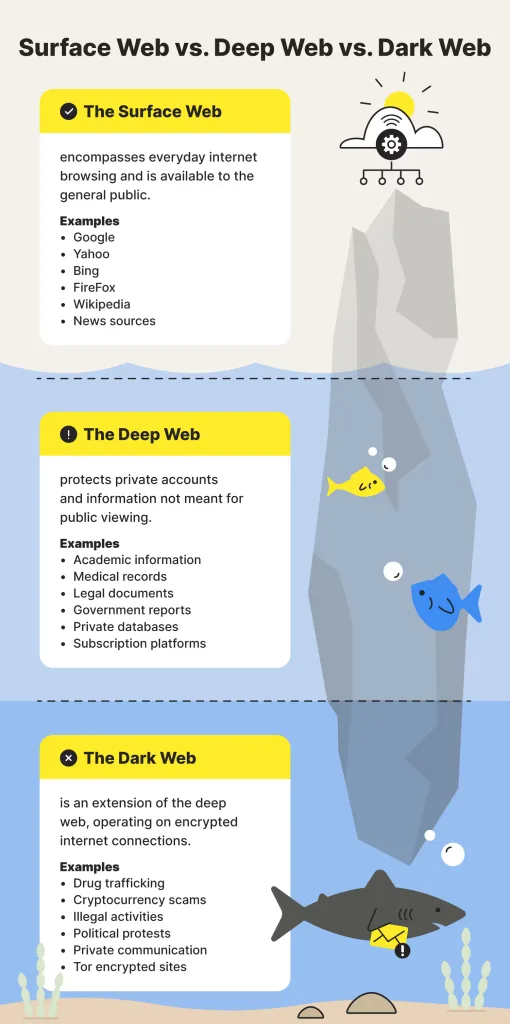
The dark web is a specific part of the deep web, itself an integral part of the internet but invisible to conventional search engines. To understand this architecture, you need to distinguish three distinct layers of the web.
The three layers of the internet
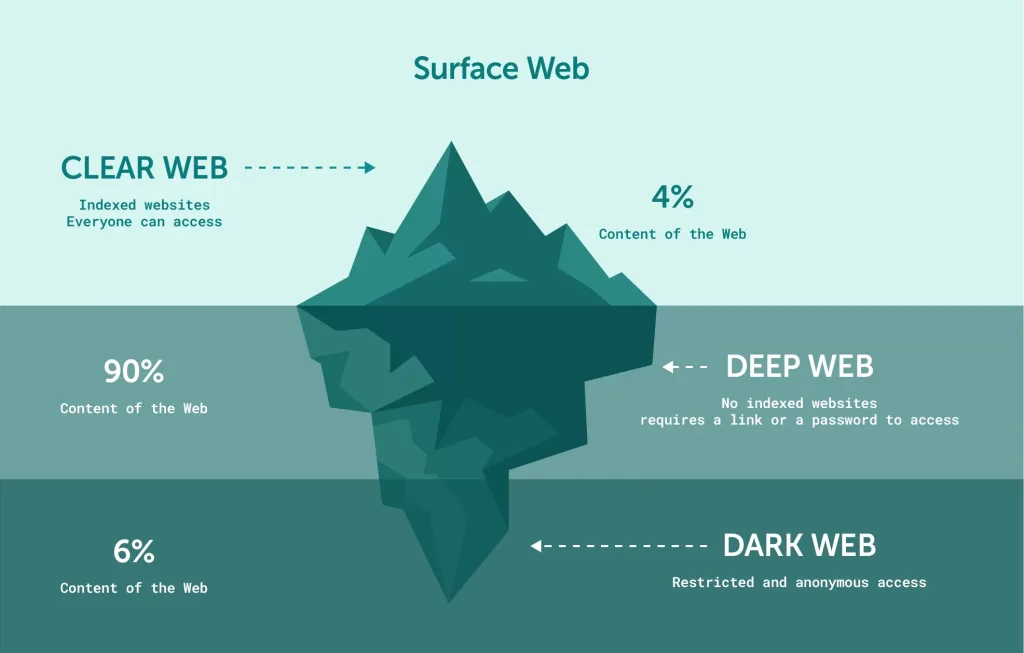
The Surface Web is the visible part of the internet, indexed by search engines such as Google or Bing. It accounts for only about 4% of all online content and contains the ordinary websites you visit every day.
The Deep Web covers all content not indexed by search engines, around 96% of the internet. It includes private databases, company intranets, online bank accounts and all content protected by passwords stored in password managers.
The Dark Web is a small part of the deep web, representing around 5% of all internet content. It consists of overlay networks that require specialised software to access, mainly the Tor browser.
The history and origins of the dark web
The concept of the darknet was developed in the 1970s to create networks isolated from the public internet. However, the modern dark web as we know it has its origins in the Tor project (The Onion Router), created in 2002 by the US Navy.
The Tor project and onion routing
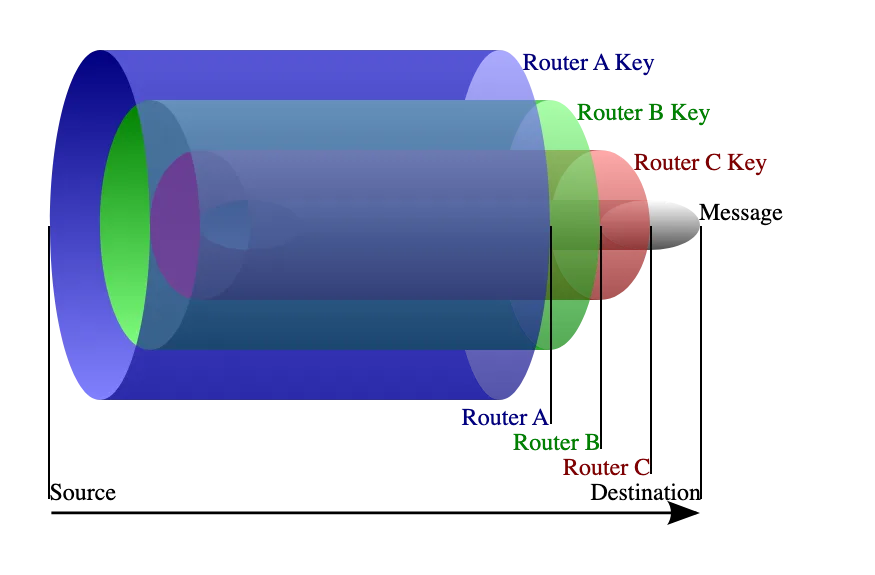
Tor uses a technique called onion routing, which passes data through at least three relay servers, encrypting the information at each step. This layered architecture, like the layers of an onion, guarantees anonymity by preventing any single server from knowing both the origin and the final destination of the data.
The Tor browser, launched in 2008, made the dark web accessible to the general public and now has more than 4.61 million daily users worldwide, with Germany leading the statistics with more than 2.34 million daily users.
Dark web statistics in 2025
Market size and growth
The latest data shows that the dark web economy has grown substantially. The dark web intelligence market is expected to reach $789.5 million in 2025 and grow to $2.92 billion by 2032, a compound annual growth rate of 21.8%.
User demographics
According to a 2019 Cornell University study, 84.7% of dark web users identify as men, while only 9.4% identify as women. The largest group (23.5%) of users are aged 36 to 45, followed by 11.8% aged 18 to 25.
Geographical distribution
Germany currently holds the record for the number of daily Tor users, overtaking the United States for the first time. The geographical distribution shows:
- Germany: 51% of Tor users
- United States: 13% of Tor users
- Finland: 5.22% of daily users
- India: 3.97% of all users
Dark web content: between legal and illegal
The nature of the available content
Contrary to popular belief, the dark web does not host only illegal content. Statistics show that 56.8% of the content is indeed illegal, which means that more than 40% remains legal and legitimate.
Legitimate activities on the dark web
Privacy protection: many users access it to preserve their anonymity, particularly in countries with heavy government surveillance.
Journalism and dissent: journalists and political dissidents use the dark web to communicate securely and get around censorship. Organisations such as Human Rights Watch and the Electronic Frontier Foundation support these uses.
Legitimate services: dark web versions of popular sites exist, such as Facebook, ProtonMail and The New York Times, offering extra privacy protection.
Illegal activities and their proportions
The dark side includes various criminal activities:
- Drug trafficking: around 8.1% of marketplace activity
- Arms sales: the United States accounts for 60% of arms sales, Europe for 25%
- Stolen data: more than 15 billion compromised credentials discovered in 2022
- Cybercrime services: around 60% of marketplaces focus on cybercrime-related activities
Marketplaces and the dark web economy
The main marketplaces in 2025
BlackSprut currently dominates the market with a 28% share, making it the largest dark web marketplace. This dominance follows the collapse of Hydra in 2022, which caused darknet marketplace revenue to fall by 89.4%.
Dark web prices
Marketplace prices reveal the scale of this underground economy:
- Cloned credit cards with PIN: $25
- Credit card with a $5,000 balance: $110
- Hacked PayPal accounts (minimum $100): $30
- High-quality premium malware: $4,500
- Forged Maltese passport: $4,000
Transaction volume
Cryptocurrency transactions on the dark web almost doubled compared with 2020 levels, reaching an estimated value of nearly $25 billion in 2022. Bitcoin remains the dominant cryptocurrency, used in 98% of transactions.
How to access the dark web safely
Essential technical prerequisites
Install a quality VPN: before using Tor, it is crucial to enable VPN protection. NordVPN, ExpressVPN and CyberGhost are recommended for their no-logs policies and optimised servers.
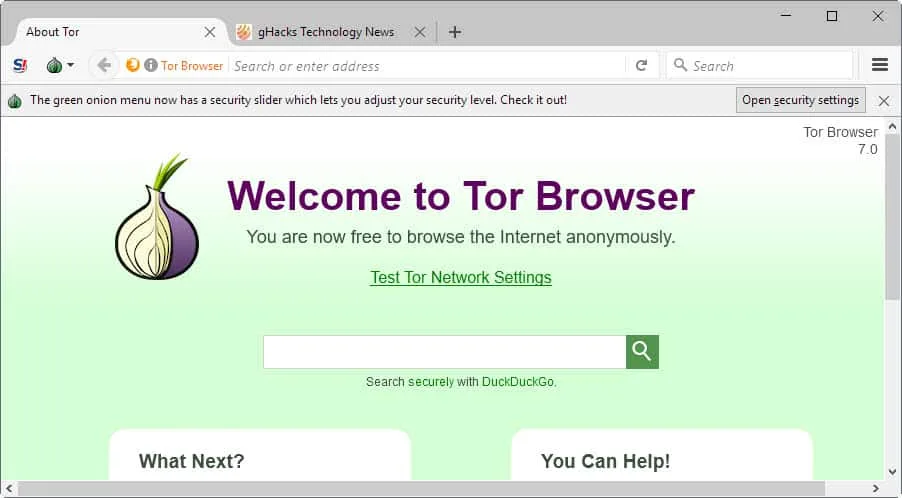
The Tor browser: available for free, Tor is the standard way to access the dark web. It looks like an ordinary browser but gives access to .onion domains.
Safe access procedure
- Enable the VPN: connect to a reliable VPN server first
- Launch Tor: open the Tor browser once the VPN connection is established
- Browse carefully: use directories such as The Hidden Wiki with caution
- Avoid downloads: never download files from the dark web
Dark web risks and threats
Technical threats
Malware and viruses: the lack of regulation encourages the spread of malicious software. Sites can infect your system without warning.
Phishing and scams: phishing techniques are commonplace, aiming to steal your credentials or personal data.
Data exposure: browsing without adequate protection can expose your real IP address and compromise your anonymity.
Legal threats
Law enforcement surveillance: the authorities actively monitor illegal marketplaces and can track users.
Legal liability: accessing certain content or services may expose you to prosecution, depending on the laws of your country.
Psychological threats
Shocking content: the dark web hosts disturbing content that can have a significant psychological impact.
Manipulation: criminals exploit beginners’ curiosity to lure them into illegal activities.
The dark web and cybersecurity
Impact on businesses
Around 543 million assets linked to Fortune 1000 employees are available on the dark web, a major threat to corporate security. The retail sector is most at risk with 30% of threats, followed by IT (23%) and finance (22%).
Monitoring and protection
Dark web monitoring: companies are investing heavily in dark web monitoring to detect data leaks quickly. These solutions continuously scan marketplaces for compromised credentials.
Threat intelligence: 78% of users worldwide rely on commercial intelligence feeds as their main sources of threat information.
The cost of cybercrime
In 2023, 880,418 cybercrime complaints were recorded in the United States, resulting in $12.5 billion in losses, a 22% increase on 2022.
Law enforcement action
Recent operations
Operation SpecTor: this international operation led to the seizure of more than $53.4 million, 117 firearms and 850 kg of illegal drugs.
Marketplace shutdowns: the authorities have closed several major marketplaces, but new platforms quickly emerge to fill the gap.
Persistent challenges
Despite law enforcement efforts, the dark web shows remarkable resilience. Arrests of administrators often lead to new platforms being created rather than activities stopping.
Legitimate and ethical uses of the dark web
Privacy protection
At a time when digital surveillance is intensifying, the dark web offers a refuge for those who legitimately want to preserve their anonymity. This protection is particularly crucial for:
Whistleblowers: enabling them to disclose information in the public interest without risking reprisals.
Political dissidents: offering a secure means of communication under authoritarian regimes.
Journalists: protecting their sources and sensitive communications.
Getting around censorship
The dark web provides access to information in countries where the internet is censored. This democratic function justifies the support of human rights organisations.
Research and education
Academic research: researchers study the dark web to understand criminal phenomena and develop countermeasures.
Cybersecurity training: security professionals use the dark web to understand threats and improve defences.
The future of the dark web
Technological developments
Privacy coins: the growing adoption of Monero and Zcash strengthens transaction anonymity, making law enforcement’s job harder.
Artificial intelligence: AI is increasingly used to automate criminal activities, notably to create sophisticated phishing chatbots.
New platforms: new darknets are emerging, offering alternatives to Tor with improved features.
Regulatory challenges
Governments are trying to adapt their legislation to fight illegal dark web activities while preserving legitimate uses. This balance remains difficult to strike.
Societal impact
The dark web will probably keep growing, fuelled by growing concerns about digital privacy and government surveillance.
Safety tips for browsing the dark web
Essential technical precautions
Always use a VPN: never access the dark web without active VPN protection. Choose a provider that keeps no logs.
Update regularly: keep Tor and your operating system up to date to benefit from the latest security patches.
Disable JavaScript: turn off JavaScript in Tor to avoid exploits based on malicious scripts.
Behavioural precautions
Avoid downloads: never download files from the dark web, as they could contain malware.
No personal information: never use your real personal information or your usual credentials.
Targeted browsing: avoid random browsing and plan your destinations in advance using reliable sources.
Legality and ethics
Respect the law: even on the dark web, you remain subject to the laws of your country of residence.
Avoid morbid curiosity: resist the temptation to explore illegal content “out of curiosity”.
Protect others: never share links to illegal content with other people.
The dark web: between fascination and reality
The dark web is a complex phenomenon that goes far beyond the clichés spread by the media. While it does host a significant share of illegal activity, it is also a valuable space of digital freedom for many legitimate users.
In 2025, with more than 3 million daily users and an economy worth several billion dollars, the dark web has become an unavoidable digital ecosystem. Understanding it is essential for cybersecurity professionals, researchers and anyone concerned about digital privacy.
The approach to the dark web should remain balanced: neither excessive demonisation nor dangerous trivialisation. It is a powerful tool that can serve both privacy protection and criminal activity, depending on how its users choose to use it.
To navigate this world safely, caution, preparation and respect for the law remain the key words. The dark web will continue to evolve alongside the challenges of our digital society, requiring constant vigilance and understanding of its implications.
Frequently asked questions
Accessing the dark web is not illegal in France or in most Western countries. Only the illegal activities carried out on this part of the internet are punishable by law, such as buying drugs or weapons.
To access the dark web safely, first enable a reliable VPN, then use the Tor browser. It is essential never to download files and to avoid disclosing your personal information.
The dark web represents around 5% of the entire internet and has more than 3 million daily users in 2025. The dark web market is expected to reach $2.92 billion by 2032.
Although the dark web offers greater anonymity thanks to the Tor network, users can be traced if they do not take the necessary precautions (VPN, no personal information, careful browsing).
The dark web contains around 57% illegal content and 43% legal content. It hosts criminal marketplaces, but also legitimate sites for privacy protection, journalism and getting around censorship.
The main risks include exposure to malware, phishing attempts, shocking content, scams and legal risks if you access illegal content.

Leave a Reply